
Apple has finally shared official adoption numbers for iOS 26, and the rollout looks strong, though not record-breaking.
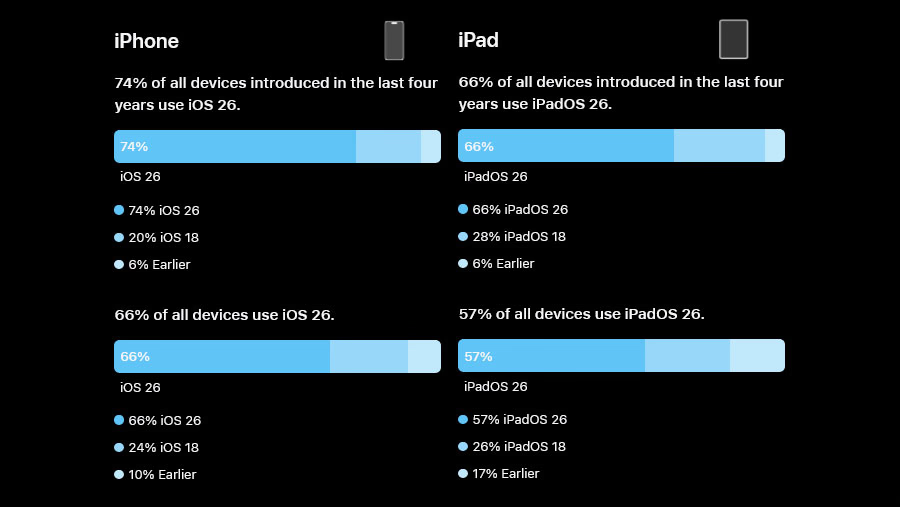
According to new data published on Apple’s developer website, 74% of iPhones introduced in the last four years are now running iOS 26. When looking at all active iPhones worldwide, that number sits at 66%.
These figures are based on devices that transacted on the App Store as of February 12, 2026. Since iOS 26 launched on September 15, 2025, that gives the update roughly 150 days to spread.
So how does that stack up against previous releases?
iOS 26 adoption on recent devices
For iPhones introduced in the last four years:
- iOS 26: 74%
- iOS 18: 20%
- Earlier versions: 6%
At first glance, that’s impressive. Nearly three out of four relatively modern iPhones have already upgraded.
However, when you compare it to past launches, the story becomes more nuanced.
Suggested: Download iOS 26.3 IPSW and iPadOS 26.3 IPSW (Direct Links)
How it compares to iOS 18
When iOS 18 launched on September 16, 2024, Apple measured adoption after 127 days. At that point:
- iOS 18: 76%
- iOS 17: 19%
- Earlier: 5%
So technically, iOS 18 was tracking slightly ahead at a similar stage, though it had about three fewer weeks of availability when measured.
How it compares to iOS 17
Looking further back, iOS 17 was released on September 18, 2023. After 139 days:
- iOS 17: 76%
- iOS 16: 20%
- Earlier: 4%
That means both iOS 17 and iOS 18 reached 76% adoption among recent devices, edging out iOS 26’s current 74%.
It is not a dramatic gap, but it is noticeable.
Worth checking out: One in Every Four Smartphones Is Now an iPhone
Adoption across all active iPhones
When Apple broadens the scope to include all active iPhones worldwide, including older hardware, here is how things look:
- iOS 26: 66%
- iOS 18: 24%
- Earlier: 10%
For comparison, at a similar point in its lifecycle:
iOS 18 overall adoption:
- iOS 18: 68%
- iOS 17: 19%
- Earlier: 13%
iOS 17 overall adoption:
- iOS 17: 66%
- iOS 16: 23%
- Earlier: 11%
Interestingly, iOS 26 matches iOS 17’s overall 66% figure but trails slightly behind iOS 18’s 68%.
Why the Slight Dip?
There are a few possible explanations.
Liquid Glass is a noticeable design shift. It’s modern, layered, more depth-heavy. But once you actually live with it for a day or two, your muscle memory still works the same way.
- Same app grid
- Same gestures
- Same Control Center logic
- Same overall navigation
Compare that to iOS 18, which leaned more into functional upgrades and ecosystem-level changes. A lot of users update when something changes how they use the phone, not just how it looks.
Second, device longevity continues to increase. As older iPhones remain in circulation longer, a portion of the installed base inevitably stays behind on earlier versions.
Still, 74% adoption among recent devices after five months is strong by any industry standard. Android OEMs would probably celebrate numbers like this.
Maintaining adoption rate
The most important takeaway is consistency. Across iOS 17, iOS 18, and now iOS 26, Apple continues to maintain adoption rates that hover in the mid-70% range on recent hardware and around two-thirds across the entire active base.
That level of update penetration remains one of Apple’s biggest ecosystem advantages. Developers can confidently build for modern APIs without worrying about massive fragmentation.
Even if iOS 26 is slightly behind the last two releases at this stage, it is still moving at a pace most platforms would envy.