
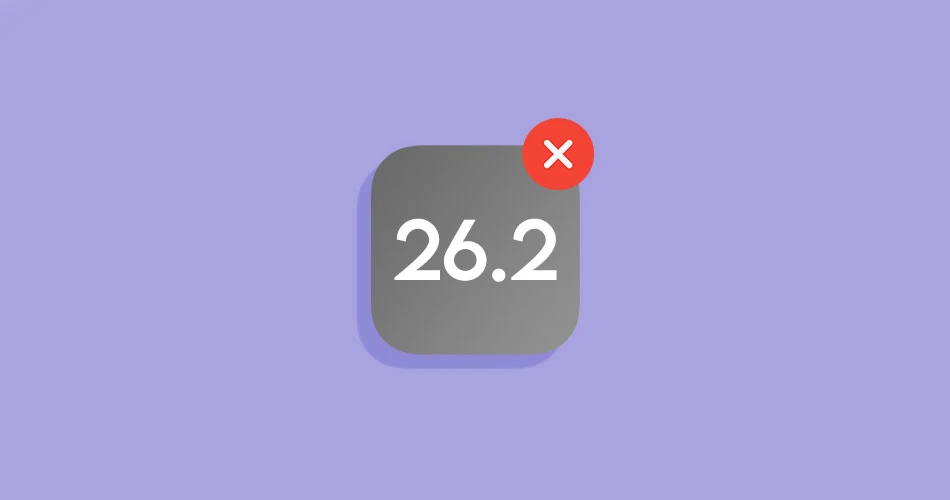
Following the release of iOS 26.2.1 last week, Apple has now stopped signing iOS 26.2, which means iPhone users can no longer downgrade to that version once they’ve updated.
What does “stopped signing” actually mean?
Whenever Apple stops signing an older iOS release, it prevents that software from being installed through official restore or downgrade methods. In practice:
- If you’re on iOS 26.2.1, you can’t go back to iOS 26.2
- Downgrades to earlier versions are blocked entirely
- The only supported path is forward, not backward
This is something Apple regularly does after pushing an update, especially when stability or security improvements are involved.
iOS 26.2.1 didn’t mention security fixes, but timing says a lot
Interestingly, iOS 26.2.1’s release notes were fairly minimal, mentioning support for AirTag (2nd generation) and general bug fixes, with no listed CVEs or detailed security disclosures.
Still, Apple ending iOS 26.2 signing this quickly usually suggests there’s more under the hood than the notes let on.
Other older iOS versions also lost signing
Apple also reportedly stopped signing several older updates, including:
- iOS 12.5.7
- iOS 15.8.5
- iOS 16.7.12
- iOS 18.7.3
This follows the recent releases of iOS 12.5.8, iOS 15.8.6, iOS 16.7.14, and iOS 18.7.4.
If you were hoping to downgrade from iOS 26.2.1 back to iOS 26.2, that option is now gone. As usual, Apple wants users on the latest version, and once signing stops, there’s no official way back.