

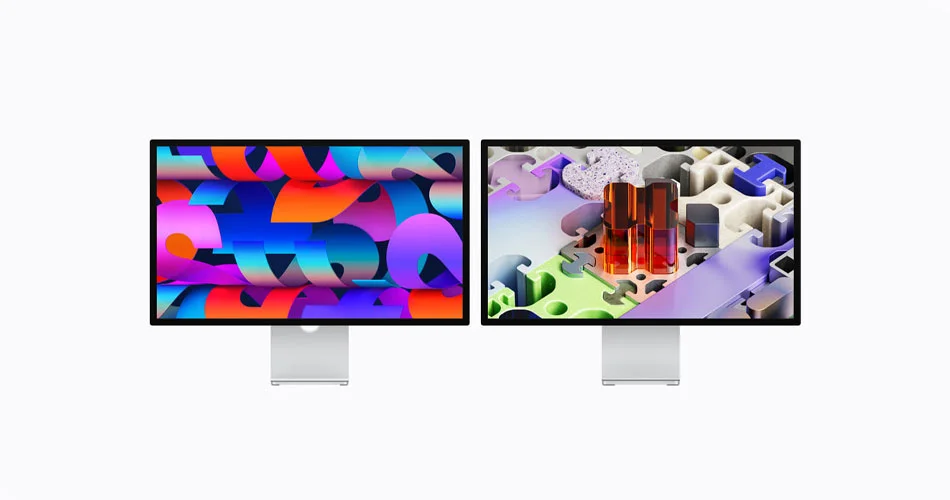
Apple has officially refreshed its external display lineup, introducing a new Studio Display alongside the all-new Studio Display XDR.
The updated Studio Display brings a 12-megapixel Center Stage camera and Thunderbolt 5 support, while maintaining its familiar design and price point. It goes on sale tomorrow starting at $1,599, or $1,499 for education customers.
A direct replacement at the same price
The new Studio Display is a straight replacement for the previous-generation model, launching at the exact same starting price.
Meanwhile, the Studio Display XDR steps in as the successor to the Pro Display XDR, starting at $3,299. And as expected, most of the major upgrades are reserved for this higher-end model.
What’s actually new on Studio Display?
Despite Thunderbolt 5 being the headline upgrade, the changes to the standard Studio Display are relatively modest.
Here’s what’s improved:
- 12MP Center Stage webcam
- Updated six-speaker sound system with deeper bass
- Thunderbolt 5 connectivity
The “studio-quality” three-microphone array appears unchanged compared to the previous generation.
Same 5K panel as before
If you were hoping for a display panel upgrade, this is where things stay familiar.
The Studio Display still features:
- 27-inch panel
- 5K resolution
- 60Hz refresh rate
- P3 wide color
- 600 nits brightness
Apple is quoting identical technical specifications to the outgoing model.
By comparison, the Studio Display XDR gets the more meaningful upgrades, including:
- 120Hz high refresh rate
- Local dimming zones for improved contrast
That creates a clearer performance gap between the two models than ever before.
Glass options and stand upgrades
The new Studio Display is available in:
- Standard glass
- Nano-texture glass (additional $300)
It ships with a tilt-adjustable stand by default. If you want height adjustment, that upgrade costs an extra $400.
Ports, daisy chaining, and what’s in the box
Inside the box, you get:
- The display
- The stand
- A 1-meter Thunderbolt 5 cable
That single Thunderbolt 5 cable can both power a MacBook and drive the display.
On the back, the Studio Display includes:
- Two Thunderbolt 5 ports
- Two USB-C ports
With the proper daisy-chaining setup, Apple says you can run up to four Studio Displays from a single port on your Mac.
The bigger picture
This update feels evolutionary rather than revolutionary for the standard Studio Display. You get better connectivity, an improved webcam, and upgraded speakers, but the core 5K 60Hz panel remains unchanged.
If you’re looking for higher refresh rates and advanced display technology like local dimming, the Studio Display XDR is clearly positioned as the premium option.
For most Mac users, however, the new Studio Display remains Apple’s mainstream 5K external display with modern Thunderbolt 5 support and improved audio-video hardware.
Now the real question: is Thunderbolt 5 enough reason to upgrade?