

We’re only a few months into the global RAM shortage, but the effects are already starting to look serious.
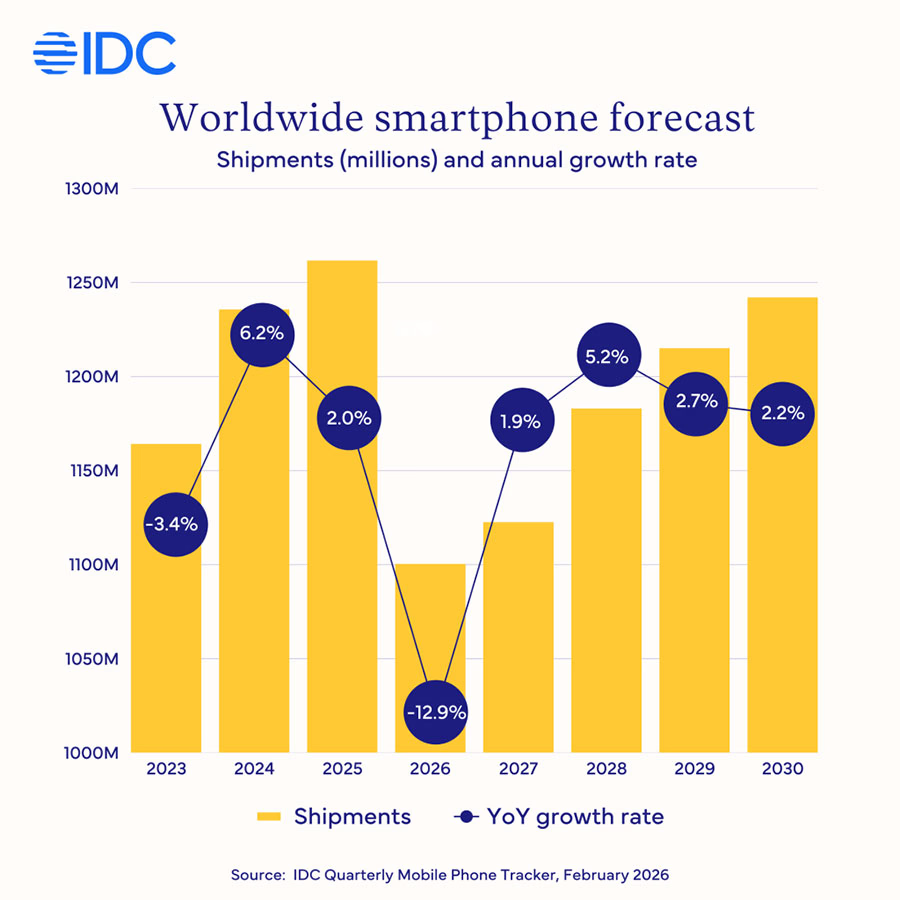
This isn’t your typical supply hiccup. According to projections from International Data Corporation, global smartphone shipments could fall 13% in 2026. That’s a drop from 1.26 billion devices in 2025 to around 1.1 billion next year.
For context, that’s roughly 160 million fewer phones. Not because people suddenly stopped wanting upgrades, but because there simply may not be enough memory to go around.
What’s actually causing the shortage?
It all comes back to AI.
Tech companies are buying huge amounts of high-bandwidth memory for AI servers and data centers. Memory manufacturers are prioritizing those higher-margin chips over the DRAM that goes into smartphones. Fabrication capacity isn’t unlimited, so something has to give.
Right now, that “something” is the mobile market.
IDC doesn’t expect supply to meaningfully stabilize until at least mid-2027. And even then, prices may not return to 2025 levels. In other words, this could permanently change how smartphones are priced.
Cheap smartphones are in the danger zone
If you’re shopping in the budget category, this is where things get uncomfortable.
Low-cost Android phones operate on tight margins. When memory prices spike, manufacturers have very little room to absorb the hit. They either:
- Raise prices
- Cut specs
- Or exit the segment entirely
Some analysts believe the sub-$100 smartphone category could shrink dramatically or disappear in certain regions.
That’s a big shift. For years, affordable Android phones drove volume growth in emerging markets. A sustained DRAM crunch puts that model under pressure.
Where Apple stands in all of this
This is where Apple enters the conversation.
Apple plays almost exclusively in the premium segment. Its iPhones carry higher average selling prices and healthier margins than most of the broader Android market. That gives Apple more flexibility when component costs rise.
It also has scale and long-term supplier relationships, which can help secure memory allocation during shortages.
But let’s be clear… Apple is not immune.
Reports suggest Apple is paying significantly more for LPDDR5X memory used in upcoming iPhones. During a recent earnings call, CEO Tim Cook acknowledged that memory pricing had a minimal impact in late 2025 but is expected to have a greater effect in early 2026.
So Apple may absorb more of the cost in the short term, but margins will still feel pressure.
RELATED: Apple Battling Rising Costs Ahead of Low-Cost MacBook Launch
A bigger market reset is coming
If IDC’s forecast proves accurate, 2026 won’t just be a down year. It could mark a structural reset in the smartphone industry.
Here’s what that might look like:
- Fewer ultra-cheap phones
- Higher average prices across the board
- Stronger focus on premium devices
- Slower overall shipment growth
Ironically, the AI revolution powering tomorrow’s technology is reshaping the economics of today’s most essential device.
For Apple, this environment could reinforce its premium-first strategy. For budget-focused Android makers, the next 18 to 24 months could be far more turbulent.
The memory shortage is no longer just a supply chain headline. It’s starting to redefine how the smartphone market works.