


Apple’s iPhone Fold, is beginning to take shape thanks to a physical mockup based on recently reported dimensions.
While Apple has not confirmed any details publicly, the mockup provides a useful window into what the iPhone Fold could look like and, more importantly, how Apple may be thinking about foldable design.
Instead of following the industry trend of maximizing screen size at all costs, Apple appears to be prioritizing usability and software experience.
A Smaller Outer Display than Most Foldables
According to an earlier report from The Information, the iPhone Fold is expected to feature a 5.3-inch outer display and a 7.7-inch inner display when unfolded. That would make it noticeably smaller than the cover screens found on most current book-style foldables.
For comparison, Samsung’s Galaxy Z Fold 7 reportedly uses a 6.5-inch outer screen, while Google’s Pixel Fold comes in at around 6.3 inches. Even Apple’s discontinued iPhone mini featured a slightly larger display.
At first glance, this decision seems counterintuitive. Foldables are typically marketed as devices that give you more screen, not less. However, once you consider how Apple tends to design products, the smaller cover screen starts to make more sense.
The mockup suggests a device that feels compact and manageable when folded, more like a secondary phone surface rather than a full smartphone replacement.
The Inner Display is Clearly the Priority
The more important detail is the rumored 4:3 aspect ratio of the iPhone Fold’s inner display. This is a familiar ratio for Apple users, closely matching the proportions used on iPads.
A 4:3 inner display is particularly well suited for multitasking, reading, browsing, and side-by-side app layouts. It avoids the awkward square dimensions that can result from taller outer screens and makes better use of space when the device is fully open.
This strongly suggests that Apple views the unfolded state as the primary mode of use. The iPhone Fold appears designed to behave more like a pocketable iPad than an oversized phone.
Why the Smaller Cover Screen May be Intentional
Book-style foldables involve unavoidable design trade-offs. A taller, phone-like cover display often leads to a less practical inner screen once unfolded. Apple seems willing to accept a smaller outer display in exchange for a more useful inner one.
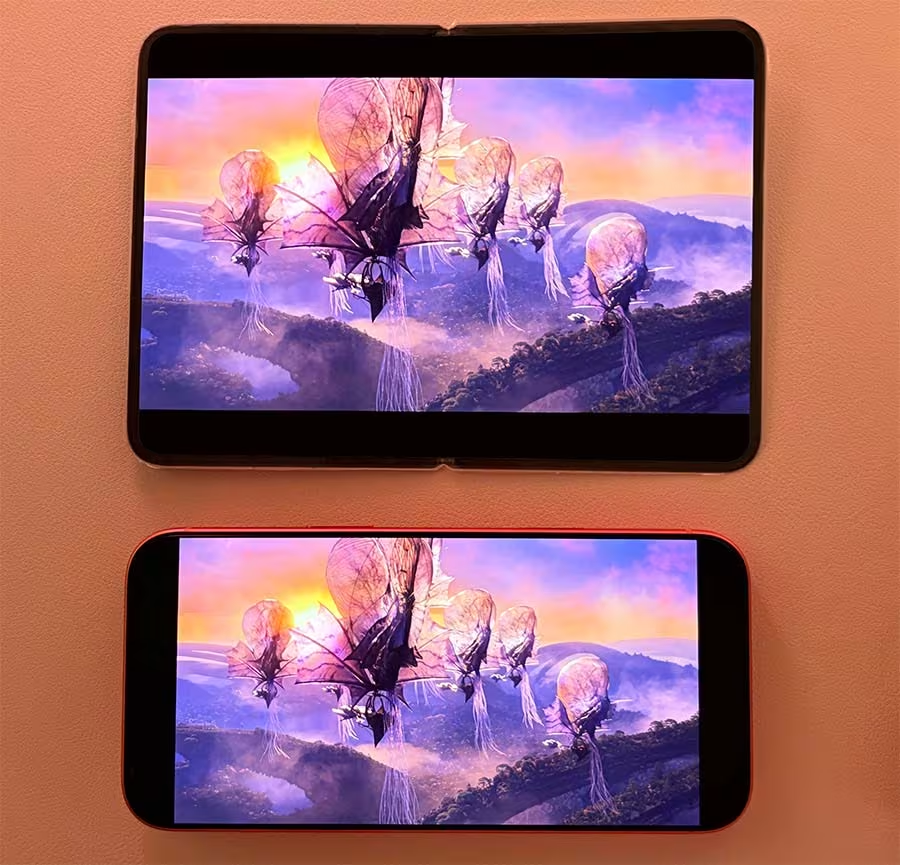
In this setup, the cover screen is likely meant for quick interactions such as checking notifications, replying to messages, or handling brief tasks. More immersive activities are clearly intended for the unfolded screen.
This approach sets Apple apart from competitors like Samsung and Google, which tend to treat the cover display as a full-time smartphone screen. Apple appears more comfortable assigning distinct roles to each state of the device.
A Premium Device with a Clear Design Philosophy
With expected pricing between $2,000 and $2,500, the iPhone Fold is shaping up to be Apple’s most expensive iPhone to date. At that level, every design decision needs to feel purposeful.
The rumored dimensions suggest Apple is betting on long-term usability rather than immediate visual impact. While some users may question the smaller outer display, the payoff is a more refined and capable unfolded experience, which is ultimately the main reason to buy a foldable.
Related: Samsung’s Wide Fold Could Rival Apple’s First Foldable iPhone in 2026
The iPhone Fold Feels Distinctly Apple
If the mockup accurately reflects Apple’s plans, the iPhone Fold looks less like a reaction to existing foldables and more like a product built around Apple’s own priorities.
When viewed not as a larger iPhone but as an iPad that folds into your pocket, the design choices feel intentional and familiar. Apple appears willing to challenge expectations if it means delivering a better overall experience.
The iPhone Fold is expected to debut alongside the iPhone 18 Pro lineup in 2026. Until then, mockups like this offer the clearest hint yet that Apple’s foldable will be defined by usability, not just screen size.