


Apple’s long-rumored foldable iPhone is starting to take a clearer shape, and if a new leak is accurate, it could look very different from anything Apple has shipped before.
According to Digital Chat Station, a well-known leaker on Weibo, Apple is currently developing what’s described as a “wide foldable” iPhone. In simple terms, this means a book-style device that opens horizontally, similar to the Galaxy Z Fold lineup, rather than a clamshell-style flip phone.
One of the biggest priorities, according to the leak, is thinness. Apple is reportedly making several internal trade-offs to keep the device as slim as possible, even if that means leaving out some familiar hardware.
Touch ID Makes a Comeback, But Not Where You Expect
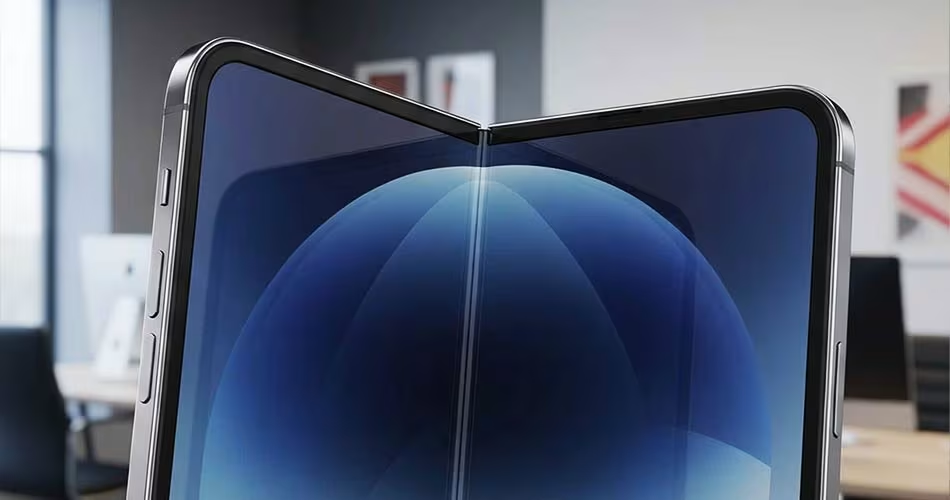
Perhaps the most surprising claim is Apple’s decision to rely on a side-mounted Touch ID sensor instead of Face ID. The leaker suggests Apple skipped Face ID hardware and under-display ultrasonic fingerprint sensors because both would add thickness and complexity to the internal design.
If true, this would mark a rare reversal for Apple, which has largely moved away from Touch ID on flagship iPhones over the past few years.
A Serious Hinge and Hidden Cameras
Foldables live or die by their hinge, and Digital Chat Station claims Apple’s hinge design is “very strong,” echoing long-standing rumors that Apple is obsessing over durability and crease reduction.
On the inside, the foldable iPhone is said to feature a 7.58-inch display with an under-panel front camera. This setup would allow Apple to avoid notches or cutouts entirely on the internal screen.
The outer display reportedly measures 5.25 inches and uses a punch-hole camera with a HIAA design, which minimizes wasted screen space. There’s no clarity yet on whether the Dynamic Island survives in any form.
Camera Hardware and What Comes Next
Rounding things out, the leak claims a dual 48-megapixel rear camera system with a physically large sensor base, hinting at a focus on image quality rather than just megapixel numbers.
Digital Chat Station also suggests the foldable phone market could see renewed momentum next year, with Samsung reportedly evaluating its own wide-format redesign with the announcement of the Galaxy Z TriFold. If Apple does enter the category, it may do so at exactly the right moment.
As always, this is early information from an unreleased prototype, and plans can change. But if these details hold, Apple’s first foldable iPhone sounds less like a safe experiment and more like a very deliberate rethink of the category.