

Apple’s long-rumored iPhone Fold is starting to sound less like a concept experiment and more like a serious engineering statement.
New supply-chain chatter suggests Apple is planning to combine liquid metal hinges with a reworked titanium body, signaling that durability and weight reduction are top priorities for its first foldable iPhone.
If true, this would be one of Apple’s most ambitious material plays yet.
A Liquid Metal Hinge Built for Longevity
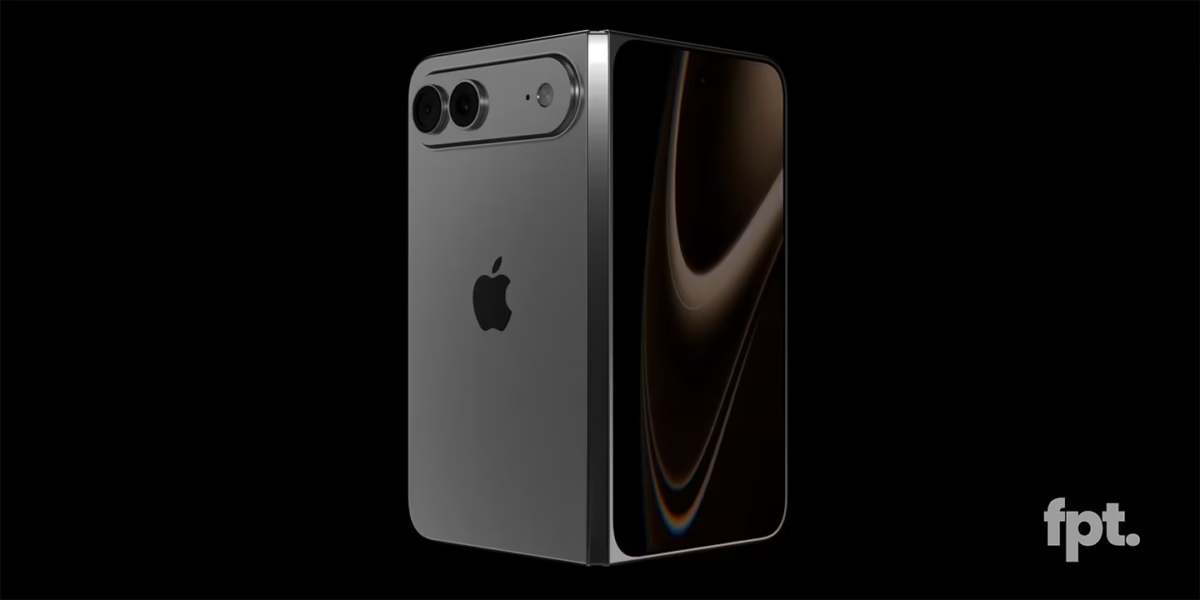
According to information shared by Korean source yeux1122, Apple is expected to use liquid metal, also known as an amorphous metal, for the hinge mechanism of the iPhone Fold.
Liquid metal is unusual because it lacks a crystalline structure. Instead of forming grains like traditional metals, its atoms are arranged randomly. That gives it several properties that make it ideal for moving parts:
- Extremely high strength
- Strong resistance to permanent bending
- Excellent fatigue resistance under repeated stress
Those traits matter more in foldables than almost any other smartphone category. Hinges are subjected to thousands of open-and-close cycles, and even minor deformation can lead to looseness, creasing, or failure over time.
Apple appears to see liquid metal as a way to solve one of the biggest pain points in foldable phones: long-term hinge durability.
Apple’s Long History with Liquid Metal
Apple’s interest in liquid metal is not new. Back in 2010, Apple secured a perpetual, worldwide exclusive license to use Liquidmetal Technologies’ intellectual property in consumer electronics.
So far, that investment has mostly resulted in small components, such as SIM ejector tools. Scaling liquid metal for large structural parts has historically been difficult and expensive. But hinges are smaller, high-stress components, making them a far more practical use case.
For a device like the iPhone Fold, where hinge reliability defines the entire experience, the material choice makes strategic sense.
A Lighter, Stronger Titanium Body
Beyond the hinge, Apple is also rumored to be refining its use of titanium for the iPhone Fold’s main chassis.
Titanium already offers a superior strength-to-weight ratio compared to aluminum or stainless steel. Foldable devices, however, introduce additional constraints:
- Larger overall surface area
- Added structural stress near the hinge
- The need to keep the device balanced when unfolded
The report suggests Apple has modified both the titanium alloy itself and its manufacturing process to improve strength while reducing weight, even while maintaining roughly the same surface area.
If accurate, the iPhone Fold would represent Apple’s fourth iteration of titanium iPhone design, giving the company multiple product cycles to refine the alloy for this specific use case.
Why Materials are Critical for a Foldable iPhone
Foldables are far less forgiving than traditional slab phones. Every extra gram affects balance. Every weak point is stressed repeatedly. Apple’s rumored material strategy suggests it is prioritizing fundamentals over flashy specs.
As one source described it, the goal appears to be “strength without bulk,” which remains one of the hardest challenges in foldable phone design.
What the iPhone Fold May Look Like
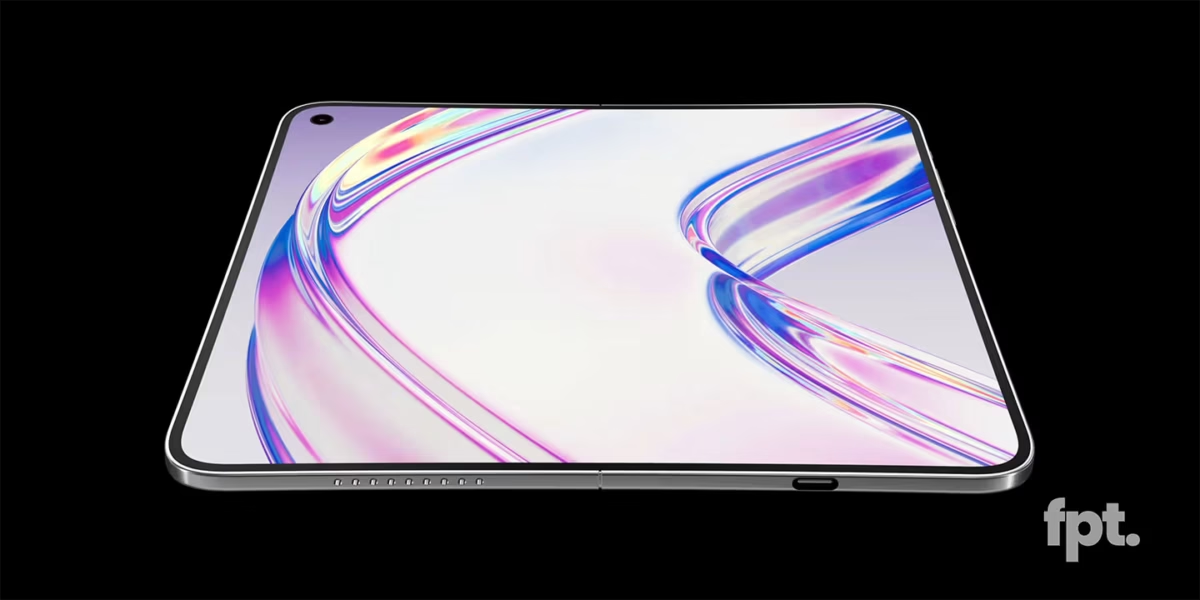
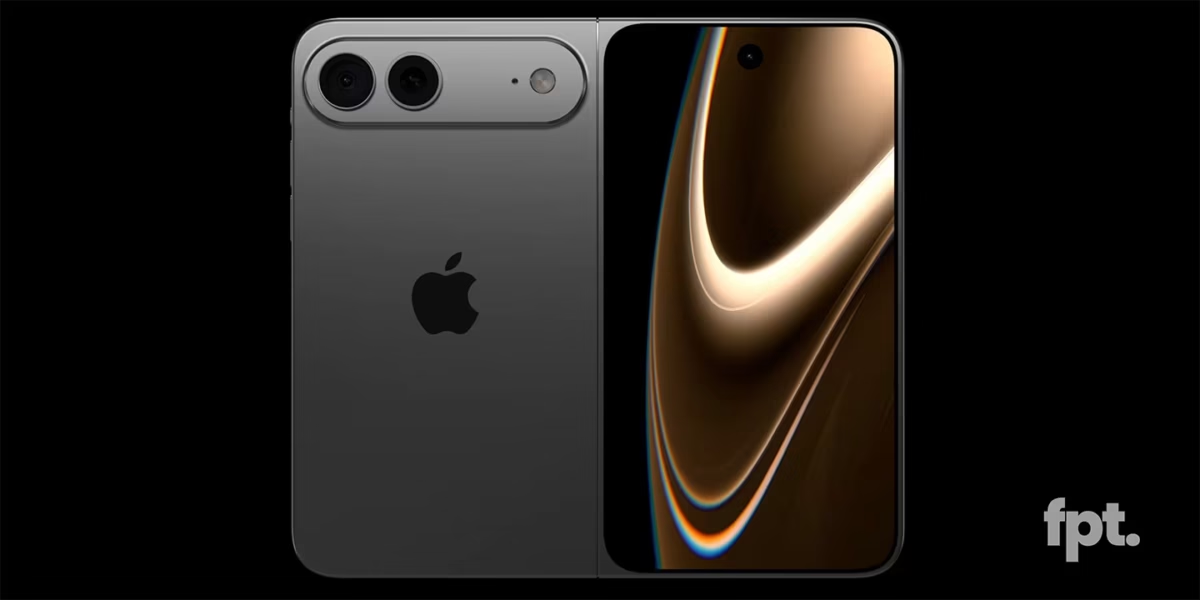
Current rumors point to a wide book-style iPhone Fold, expected to debut alongside the iPhone 18 Pro lineup later this year. Reported specifications include:
- 7.8-inch inner display
- 5.5-inch outer display
- A near crease-free folding panel
- A20 chip and Apple’s C2 modem
- Dual rear cameras
- Side-mounted Touch ID authentication
Related: Samsung’s Wide Fold Could Rival Apple’s First Foldable iPhone in 2026
If these details hold, Apple’s first foldable would clearly target the premium end of the market, competing on refinement rather than novelty. Prices are rumored to hover around the $2,000 and $2,500 mark.
The Bigger Picture
Apple rarely enters a new category without rethinking the fundamentals. The rumored combination of liquid metal and redesigned titanium suggests the iPhone Fold is less about being first and more about being durable, balanced, and long-lasting.
If Apple delivers on hinge reliability, weight distribution, and structural strength, the iPhone Fold could arrive later than competitors but with fewer compromises. That, more than headline features, may be what finally makes foldables feel ready for the mainstream.