


For years, the idea of a truly all-screen iPhone has felt like an inevitable step in Apple’s design evolution.
An iPhone without a notch or Dynamic Island, built around a seamless display, has long been the goal. But if you were expecting that vision to arrive with next year’s rumored iPhone 20, the latest leaks suggest it may not happen just yet.
The all-screen iPhone might still be out of reach
The 20th anniversary iPhone has been widely expected to deliver a major design shift. Much of that expectation centers around a fully uninterrupted display, something Apple has been gradually working toward for years.
It is also a vision closely associated with Jony Ive, who often described the ideal iPhone as a single piece of glass.
However, a new claims from Fixed Focus Digital on Weibo suggest Apple is still struggling to make meaningful progress with the underlying technology required to achieve that design.
Why Apple can’t remove the Dynamic Island yet
To create a true all-screen iPhone, Apple needs to move both the front-facing camera and its Face ID system beneath the display.
This is where the challenge lies.
Under-display cameras still tend to compromise image quality, particularly in terms of clarity and light capture. At the same time, Face ID relies on precise sensor performance, which becomes significantly harder to maintain when placed under a display layer.
Apple typically avoids introducing features that do not meet its consistency standards, which likely explains why these components have not yet been fully hidden.
Instead, the company is expected to continue refining the existing design by gradually reducing the size of the Dynamic Island rather than removing it entirely.
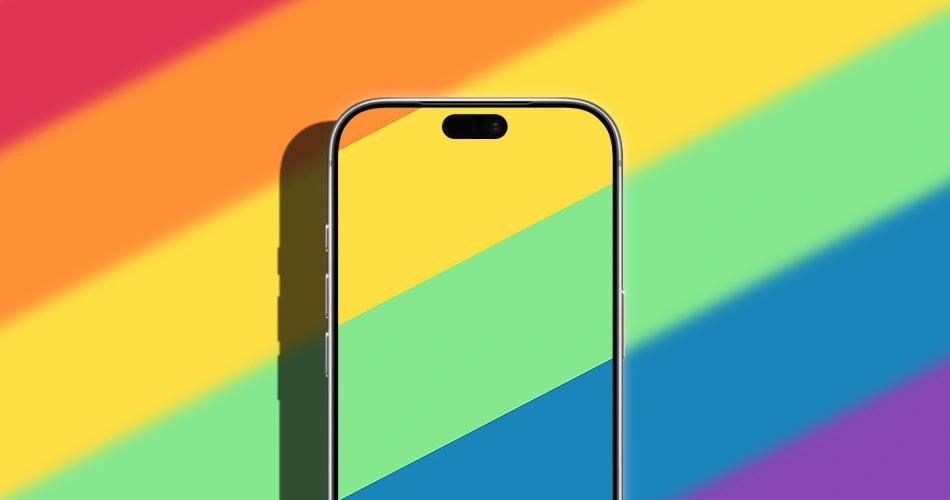
According to reports, the upcoming iPhone 18 Pro is also expected to feature a smaller Dynamic Island with Apple planning to move the Face ID module under the display.
WORTH CHECKING OUT: Why Foldable Phone Screens Crease and Apple’s Fix (iPhone Fold Leak)
What to expect from the iPhone 20 design instead
If current reports are accurate, the iPhone 20 will still bring design improvements, but they may be more incremental than revolutionary.
Rather than a completely uninterrupted display, Apple is likely to focus on making the front of the device feel more immersive through smaller cutouts and thinner bezels.
This approach allows the company to improve the overall experience without relying on technologies that are not yet fully ready for large-scale use.
Why this delay actually makes sense
While some competitors have introduced under-display components, those implementations often come with trade-offs.
Apple’s approach has historically prioritized reliability and consistency over being first to adopt new technologies. A slightly visible cutout that performs reliably is often a better experience than an invisible one that compromises usability.
There is also the challenge of scaling these technologies across millions of devices, which adds another layer of complexity beyond what is possible in prototypes or limited releases.
The bigger picture for iPhone 20
Even without a fully all-screen design, the iPhone 20 is still expected to be a significant release.
Apple’s broader iPhone roadmap includes developments such as foldable devices, thinner hardware designs, and continued improvements in AI-driven features across iOS. These areas may ultimately play a larger role in defining the device than the removal of display cutouts alone.
With more than a year remaining before launch, there is still time for progress. However, current reports suggest that expectations for a completely cutout-free iPhone should remain measured.
Final takeaway
The goal of a fully all-screen iPhone is still very much alive, but it may take longer to arrive than previously expected.
Apple appears to be making steady progress, but not at a pace that guarantees a completely uninterrupted display in the iPhone 20.
For now, a more refined version of the current design seems like the more realistic outcome.