
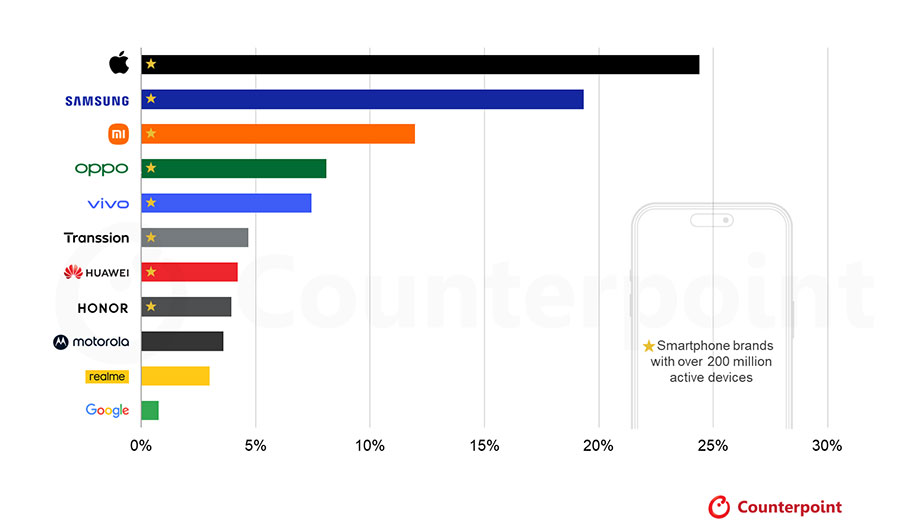
According to Counterpoint Research’s latest Smartphone Installed Base Tracker, nearly one in four active smartphones globally is now an iPhone. That puts Apple at roughly 25% of the global installed base in 2025.
In a market that only grew 2% this year, that’s a big deal.
Apple and Samsung dominate
The global active smartphone base grew modestly in 2025, up just 2% year over year. But Apple and Samsung together account for 44% of all active devices worldwide.
Apple leads the pack with about one-quarter of all active smartphones. Samsung follows in second place with roughly one-fifth of the global installed base.
According to Counterpoint Senior Analyst Karn Chauhan, Apple added more net new smartphone devices than the next seven leading OEMs combined. That is a strong signal of how well the company continues to attract and retain users, even in a mature market.
Chauhan credits Apple’s performance to:
- Strong user loyalty
- A deeply integrated iOS ecosystem
- Services that keep users locked in
Samsung’s position is supported by its wide product portfolio, covering everything from entry-level devices to premium flagships, along with broad global reach.
The rest of the market
The global top 10 smartphone brands now include:
- Apple
- Samsung
- Xiaomi
- OPPO
- vivo
- Transsion
- Huawei
- Honor
- Motorola
- realme
Only Motorola, realme, and Google remain below the 200 million active device mark. Honor was the only brand to cross that milestone in 2025.
Suggested: iPad Demand Surges as Apple Dominates the Global Tablet Market
In the premium segment, defined as devices priced above $600 wholesale, competition remains limited. Six OEMs outside Apple and Samsung together held only a single-digit sales share in this category.
A slower growth era
Why just 2% growth overall?
Counterpoint says smartphone replacement cycles are stretching to nearly four years. On top of that, more second-life devices are staying active in the market.
Even in a slow-growth environment, Apple continues to expand its footprint. And with one in four smartphones now running iOS, the company’s ecosystem influence has never been stronger.