
For a long time, OpenAI’s hardware ambitions felt abstract. There were hints, reports, and carefully worded statements, but nothing that felt concrete. That’s starting to change.
Between new comments from OpenAI leadership and growing signs of progress inside Jony Ive’s io team, the company’s first hardware product is no longer a vague future idea. It’s beginning to take shape.
A 2026 Reveal, Rooted in Earlier Plans
At the World Economic Forum in Davos, OpenAI policy chief Chris Lehane (via: Axios) confirmed that the company is on track to unveil its first device in the second half of 2026. He stopped short of promising an on-sale date, but an unveiling alone would be a major milestone.
What makes this notable is how closely it aligns with earlier reporting. Last year, Sam Altman and Jony Ive publicly revealed they were working together on a family of AI hardware products under the io banner. The emphasis back then was on long-term thinking, not rushing something to market.
This new timeline suggests that collaboration has moved well beyond early ideation.
The io Team Is Quietly Taking Shape
Behind the scenes, the io project has been steadily adding people who know how to design products at scale.
One of the most telling hires is Janum Trivedi, a former Apple engineer and interface designer who worked on foundational iPadOS features like Split View, Drag and Drop, and system-level gestures. He has now joined the OpenAI × LoveFrom design team, working specifically on io products.
That kind of background points to something deeper than a novelty device. It suggests OpenAI and Ive are rethinking interaction itself, much like Apple once did with multitouch.
Not a Typical Gadget
While OpenAI has revealed very little about the device itself, the direction feels increasingly clear.
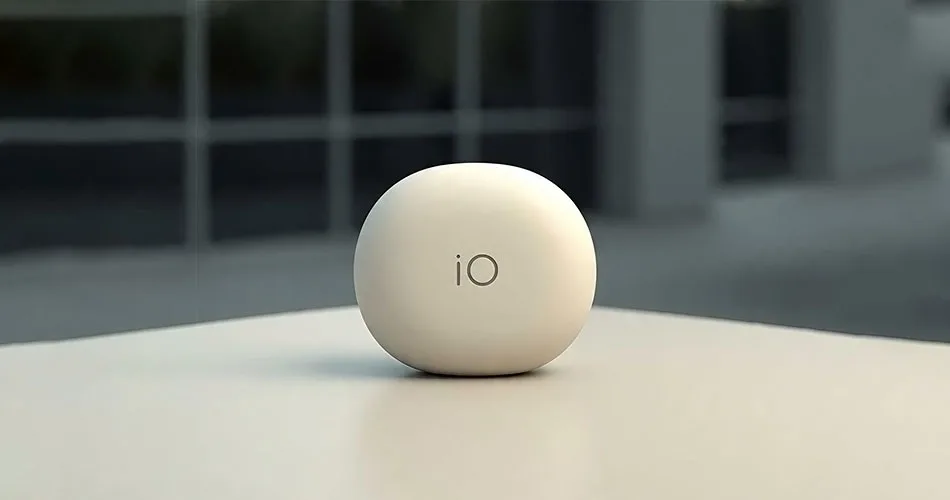
Earlier reports indicated that the first io product may be largely audio-based, and OpenAI has recently been strengthening its voice and audio models. The company has also confirmed that at least one prototype already exists.
Rather than competing directly with phones, tablets, or laptops, this feels like an attempt to create a new category. Something more ambient, more conversational, and less dependent on screens.
Why the Jony Ive Partnership Matters
Jony Ive’s involvement has always been the strongest signal that OpenAI is serious about hardware.
Ive has repeatedly said that meaningful products come from restraint, clarity, and deep focus on human behavior. That philosophy aligns closely with OpenAI’s push toward more natural AI interaction, where technology adapts to people instead of demanding constant attention.
The io collaboration suggests this device isn’t about specs or features. It’s about redefining how AI fits into everyday life.
A Slow Burn, by Design
Nothing about this rollout feels rushed.
OpenAI appears comfortable letting expectations build gradually, even if that means unveiling hardware in 2026 and shipping later. That patience mirrors Apple’s historical approach: take longer, but aim to fundamentally change the experience.
If this all comes together, OpenAI’s first device won’t just be a hardware debut. It will be the physical expression of how the company thinks AI should exist in the world.
And that may be the most important part of the story.