

OpenAI’s first hardware product with former Apple design chief Jony Ive just hit two major developments.
First, it has been delayed.
Second, it will not be called “io.”
New court filings, first reported by Wired, reveal that OpenAI’s long-rumored AI device will not ship before late February 2027. In the same filing, the company confirmed it has abandoned plans to use the name “io” for any AI-enabled hardware product.
That is a pretty significant shift for a project that has already generated massive hype.
OpenAI Is dropping the ‘io’ name
The update comes as part of a trademark infringement lawsuit filed by audio startup iyO.
The lawsuit followed OpenAI’s acquisition of io, a startup founded by Jony Ive after leaving Apple. The naming overlap sparked legal scrutiny.
In the latest filing, OpenAI states clearly that it has:
- Reviewed its product naming strategy
- Decided not to use “io”
- Decided not to use “IYO”
- Decided not to use any capitalization variant of those names for AI hardware
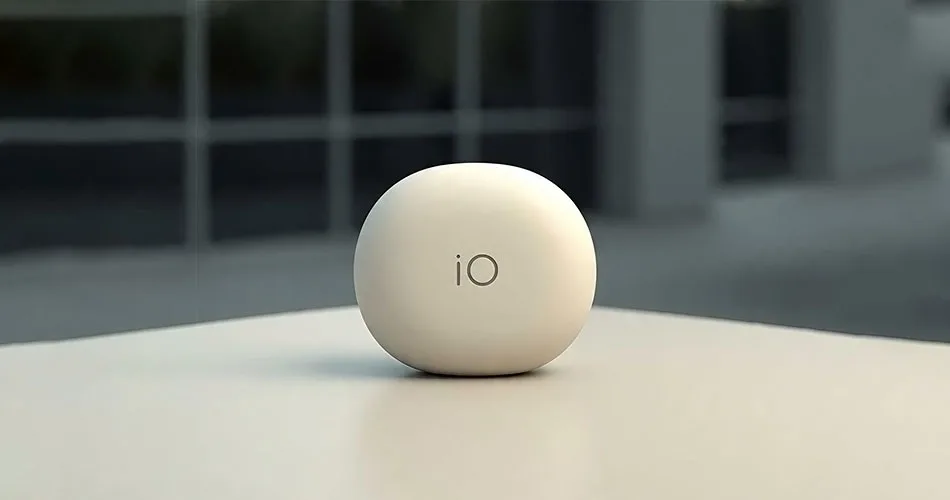
That effectively closes the door on “io” branding for the company’s first device.
This suggests OpenAI wants to avoid prolonged legal battles and potential brand confusion before even shipping its first piece of hardware.
The device is now delayed to 2027
Beyond the naming shift, the filing also confirms that OpenAI’s first hardware product will not ship before the end of February 2027.
That pushes the launch beyond OpenAI’s earlier internal goal of releasing it before the end of 2026.
The documents also reveal:
- No packaging has been created
- No marketing materials have been finalized
- The product is still in development
In other words, this device is not close to hitting store shelves.
Related: The Problem With Building the Perfect AI Companion: Why Jony Ive’s AI Device Is Reportedly Delayed
What is this Jony Ive AI device?
While official details remain scarce, previous reports and court filings suggest the device will be:
- Pocket-sized
- Screen-free
- Contextually aware of your surroundings
- Not an in-ear product
- Not a wearable
It has been described as a “third core device” that would sit alongside a MacBook Pro and an iPhone.
That framing alone makes it sound ambitious. OpenAI appears to be aiming for something that could redefine how people interact with AI beyond apps and chat windows.
Why the naming decision matters
Dropping the “io” name is more than just a legal technicality.
Brand identity is crucial when launching an entirely new hardware category. If OpenAI is trying to build a long-term platform, the name needs to be clean, defensible, and globally scalable.
Abandoning “io” now prevents confusion and potential reputational risk later. It also signals that OpenAI is thinking carefully about how this product will be positioned in the market.
A bigger bet on AI hardware
CEO Sam Altman has reportedly told staff that the prototype is “the coolest piece of technology that the world will have ever seen.”
That is bold.
But building revolutionary hardware takes time, especially when:
- A new device category is involved
- Industrial design is central to the experience
- Supply chains must be built from scratch
- Legal naming disputes surface
The delay to 2027 gives OpenAI more runway to refine both the product and its identity.
For now, two things are clear: The device is not coming in 2026, and it will not be called “io.” Everything else remains a mystery.