

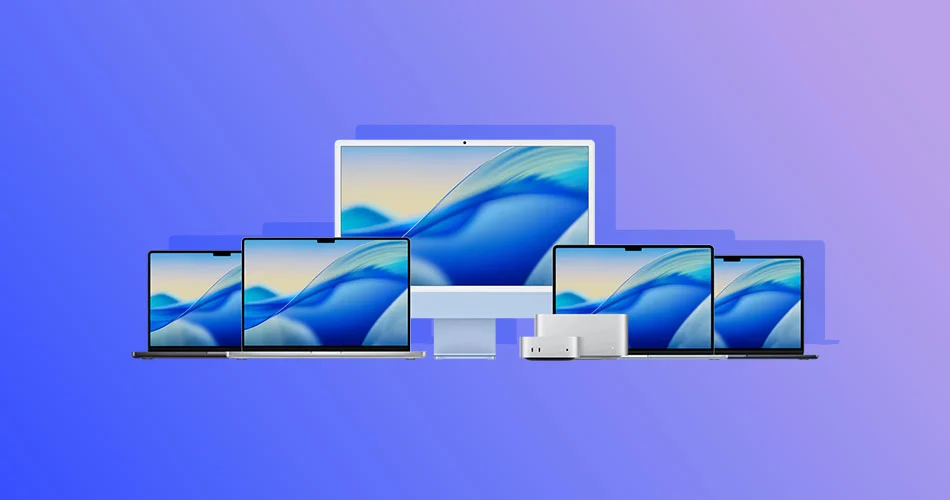
Mac upgrades have felt oddly predictable lately. New chip, better battery, maybe a brighter display, and the price stays… basically the same. But 2026 might be the year that changes.
Not because Apple suddenly feels bold about charging more, but because one of the most boring parts of a computer is becoming one of the most expensive: RAM.
And the Mac is sitting right in the middle of the pressure.
AI is driving up memory costs across the industry
The current AI boom is not just about chatbots and new features. It is also reshaping the hardware world behind the scenes.
Massive AI data centers need huge amounts of memory, and that demand has pushed RAM prices sharply upward. The supply is not infinite, and when the biggest players start buying in bulk, everyone else feels it.
Apple has managed to keep consumer pricing steady so far, but these kinds of cost increases do not stay invisible forever.
Apple may try to keep iPhone prices steady
Analyst Ming Chi Kuo recently weighed in on how Apple could respond, especially with the iPhone 18 expected later this year.
His expectation is that Apple will do everything it can to avoid raising the starting iPhone price, even if that means taking a short term hit to margins.
That strategy makes sense. The iPhone is Apple’s headline product, and even a small price jump becomes global news instantly.
Services revenue gives Apple some cushion
One reason Apple can afford to hold the line on iPhone pricing is Services.
Subscriptions, App Store revenue, iCloud, Apple TV+, and bundles like Creator Studio have become a huge part of Apple’s business, and they tend to be far more profitable than hardware.
Kuo suggests Apple could lean on that side of the business to offset rising component costs.
Still, there is only so much cushioning Services can provide if parts keep getting more expensive through 2026.
Macs are the easier place for pricing changes
If Apple wants iPhones to stay stable, the Mac becomes the obvious pressure valve.
Macs are important, but they are not scrutinized the same way iPhones are. A MacBook price bump would spark discussion, but it would not dominate the mainstream conversation.
And Macs come with a built in pricing lever that Apple has used for years: memory upgrades.
RAM is one of the few areas where Apple can adjust configuration pricing without changing the headline starting price too dramatically.
A redesign year is the perfect cover

The timing is also… convenient.
Apple is rumored to be preparing a major MacBook Pro refresh in the second half of this year, with expected upgrades like:
- M6 generation chips
- OLED displays
- A thinner redesign
- Possibly touchscreen support
Related: Apple’s Mac Roadmap Leaked: 15 New Macs Coming Through 2026, Including M5 and M6 Models
When a product looks dramatically new, higher prices are easier to justify. Apple would not even need to call it a price increase. It could simply position it as the cost of the next era of MacBook Pro.
What Mac buyers should watch next
Nothing here is confirmed yet, but the direction is worth paying attention to.
Related: Apple Hardware Launches in 2026: iPhone, Mac, iPad, and More
RAM costs are rising fast. AI infrastructure is reshaping supply chains. Apple may keep iPhones steady, but Macs have more room to absorb price shifts.
So if you are planning a Mac upgrade soon, this could be one of those years where waiting comes with a tradeoff. Better hardware might be around the corner. But it might not come at the same price.


![Can You Easily Repair the MacBook Neo? Teardown Reveals a Surprisingly Repair-Friendly Design [U]](https://404daily.com/wp-content/uploads/2026/03/macbook-neo-easy-to-repair-300x158.webp)