

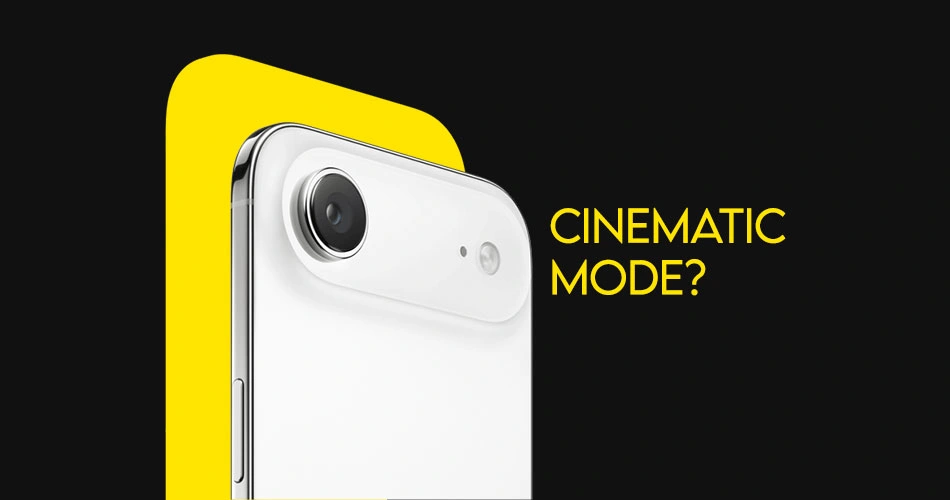
At first glance, it’s confusing. The base iPhone 17 supports Cinematic mode, yet the iPhone Air does not, even though both sit below Apple’s Pro lineup.
The key difference is camera architecture, not price tier or processing power.
Cinematic Mode Depends on Dual-Camera Depth, Not Just the Chip
The base iPhone 17 includes a dual-camera system that allows Apple to generate more reliable depth maps while recording video. That second camera is critical for:
- Continuous depth estimation
- Accurate subject separation while people move
- Stable focus transitions without visual artifacts
Cinematic mode uses this extra camera data in real time. It is not relying solely on AI or software blur.
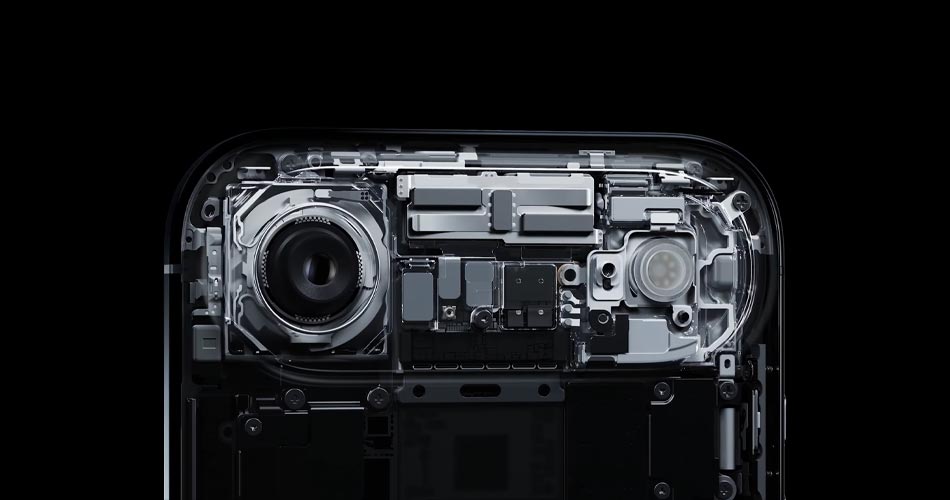
The iPhone Air, by contrast, uses a single rear camera system. While it produces excellent photos and standard video, it lacks the additional perspective data Apple needs to confidently enable Cinematic mode during video recording.
Why Software Alone Isn’t Enough
Apple could theoretically simulate Cinematic mode on a single camera using AI, but that approach introduces problems:
- Inconsistent edge detection, especially with hair or hands
- Focus “pumping” when subjects move quickly
- Reduced reliability in low light
Apple has historically avoided enabling features that deliver uneven results. If Cinematic mode cannot meet Apple’s quality bar across all lighting and motion scenarios, the feature simply doesn’t ship.
Why This Is Not a Performance or RAM Issue
Both the iPhone 17 and iPhone Air have more than enough processing power to handle the math behind Cinematic mode. In fact, the iPhone Air packs an A19 Pro chip and 12GB RAM compared to the A19 and 8GB on the iPhone 17. The limitation is input quality, not compute.
Related: iPhone 17 vs iPhone Air: The $200 Difference That Actually Matters
Without dual-camera depth data, the system cannot maintain Apple’s standard for focus transitions during live video capture.
Product Positioning Still Plays a Role, but It’s Secondary
Yes, Apple also uses features to differentiate its lineup. However, this is not a case of artificial restriction.
The base iPhone 17 already meets the minimum hardware requirements for Cinematic mode. The iPhone Air does not, and enabling the feature anyway would risk degraded results that reflect poorly on the product.
Related: Apple iPhone Air Flop Reshapes Global Smartphone Industry
The Short Answer
If you need a single, clear takeaway:
The iPhone 17 supports Cinematic mode because it has two rear cameras that can track depth during video.
The iPhone Air has only one camera, so Apple can’t guarantee the same quality.
Bottom Line
The absence of Cinematic mode on iPhone Air isn’t about cost cutting or performance limits. It’s about depth data.
Apple enables Cinematic mode only on iPhones that can deliver consistent, reliable results in real-world shooting conditions. Right now, that line starts with the base iPhone 17 and goes up from there.

![Can You Easily Repair the MacBook Neo? Teardown Reveals a Surprisingly Repair-Friendly Design [U]](https://404daily.com/wp-content/uploads/2026/03/macbook-neo-easy-to-repair-300x158.webp)