

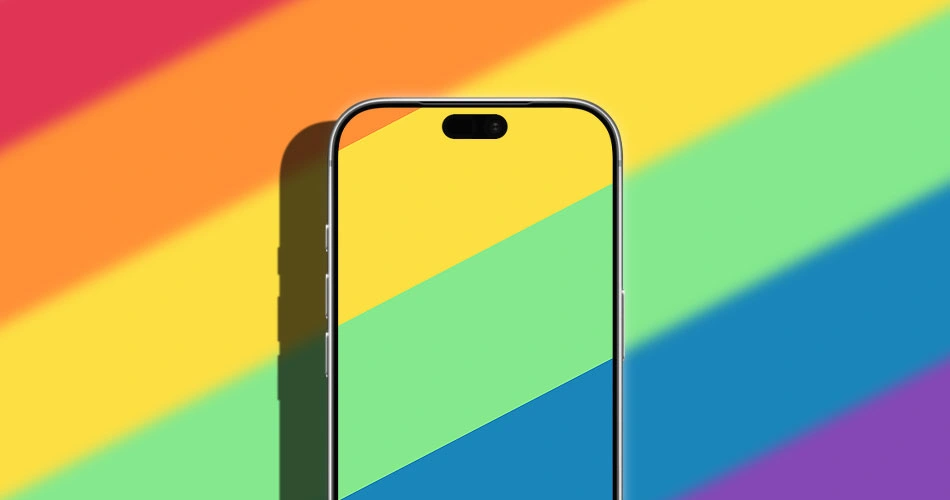
For months now, the iPhone 18 Pro’s front design has been surrounded by conflicting rumors. Some reports claimed Apple was moving the selfie camera to the top-left corner.
Others suggested under-display Face ID would finally make the Dynamic Island obsolete. A few even hinted at a dramatic redesign that would fundamentally change how the iPhone’s interface works.
A new leak may finally cut through the noise, and honestly, it sounds far more believable than the left-aligned camera theory.
No, the FaceTime camera isn’t moving to the left
According to Weibo-based leaker Instant Digital, earlier reports out of China and Korea were misunderstood when they made their way into English-language coverage. The confusion appears to stem from Face ID’s internal hardware layout, not from any major visual redesign.
Face ID is made up of multiple components, including:
- An infrared flood illuminator
- A dot projector
- An infrared camera
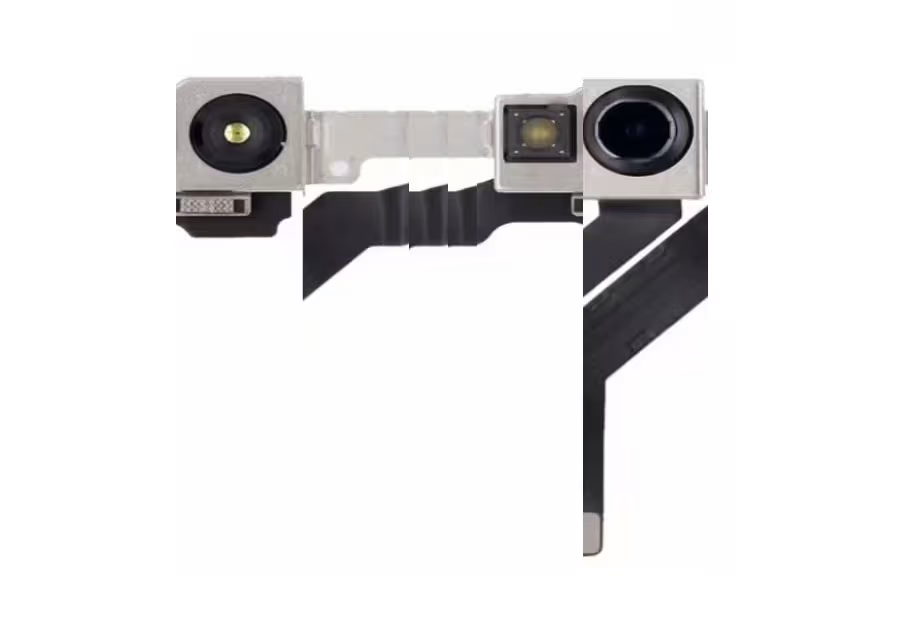
These parts sit on a shared flex cable but do not all serve the same function or have the same size requirements. The leak suggests that Apple plans to move only the infrared flood illuminator under the display, likely toward the top-left portion of the screen. The remaining components, including the selfie camera, would stay centered.
The result would be a smaller, centered Dynamic Island rather than a camera cutout jumping to the left side of the display.
Related: iPhone 18 Display Sizes and Dynamic Island Changes Leak Ahead of Launch
Why a left-side Dynamic Island never quite added up
The idea of moving the FaceTime camera to the top-left corner always felt awkward once you thought about how the Dynamic Island actually works.
Dynamic Island is not just a cutout. It is a deeply animated UI element that expands, contracts, and interacts with system alerts, Live Activities, navigation, and media playback. Its behavior is symmetrical by design. Animations grow outward from the center, content feels balanced, and visual weight is evenly distributed across the display.
Shifting that entire system to the left would introduce several problems:
- Animations would feel lopsided instead of fluid
- System alerts would pull attention away from the center of the screen
- Live Activities would appear visually unbalanced
- Apple would need to redesign years of animation logic for little benefit
Apple tends to avoid this kind of change unless it unlocks something truly necessary. In this case, there is no clear upside for the user.
A smaller Dynamic Island fits Apple’s design history
Apple almost never removes interface elements abruptly. Instead, it shrinks them, simplifies them, and gradually pushes them out of the spotlight. The notch followed this path. So did thick bezels. A reduced Dynamic Island aligns perfectly with that pattern.
By moving a single Face ID component under the display, Apple can:
- Reduce the size of the Dynamic Island
- Keep the selfie camera centered
- Preserve existing animations and UI behaviors
- Avoid unnecessary interface disruption
It is a technical improvement that results in a visual refinement, not a radical redesign.
Could Apple still move the camera later?
Possibly, but only if Apple runs into genuine design constraints. If future Face ID hardware or camera technology demands a new layout, Apple could reconsider. For now, though, there is no functional reason to relocate the FaceTime camera, especially when the current placement works so well with Dynamic Island’s animation system.
That is what makes this leak feel grounded. It solves a real engineering problem without creating a new design headache.
What to expect from the iPhone 18 Pro display
If this leak holds, the iPhone 18 Pro and iPhone 18 Pro Max will feature:
- A smaller, centered Dynamic Island
- Under-display infrared flood illuminator
- No top-left hole-punch camera
- Familiar Dynamic Island behavior, just more subtle
The report has since been corroborated by ShrimpApplePro on X, adding a bit more weight to the claim.
Apple is expected to unveil the iPhone 18 Pro lineup in September. Until then, this may be the most sensible explanation we have for how Apple plans to evolve the front of the iPhone without breaking what already works.


![Can You Easily Repair the MacBook Neo? Teardown Reveals a Surprisingly Repair-Friendly Design [U]](https://404daily.com/wp-content/uploads/2026/03/macbook-neo-easy-to-repair-300x158.webp)