
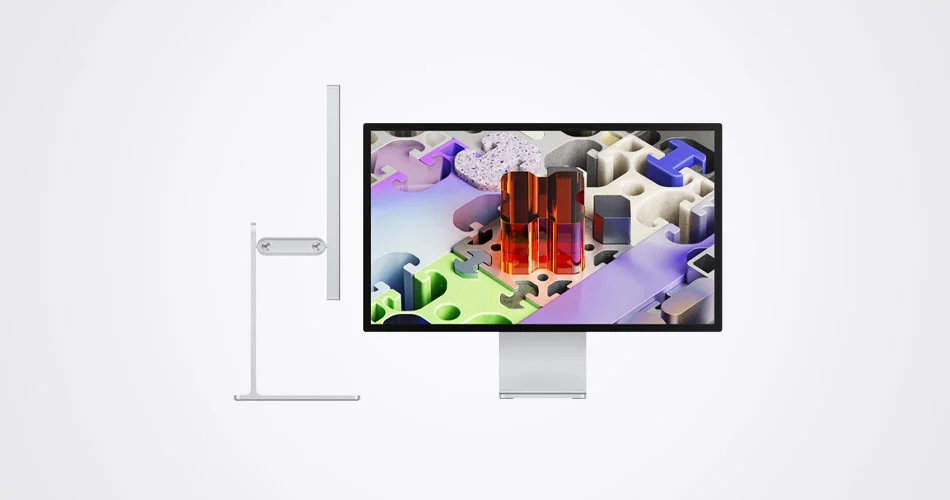
Apple has officially introduced the Studio Display XDR, expanding its professional display lineup with a major leap in panel technology, brightness, and performance.
Designed for creators and power users, Apple says the new display delivers its most advanced front-of-screen experience yet, combining a 5K Retina XDR panel with high refresh rate performance and next-generation connectivity.
Here’s everything you need to know.
A 27-inch 5K Retina XDR display, now with 120Hz
At the center of the Studio Display XDR is a 27-inch 5K Retina XDR display with a resolution of 5120-by-2880 at 218 pixels per inch. While Apple’s previous Studio Display already focused on color accuracy and sharpness, this new model pushes further with a 120Hz refresh rate alongside Adaptive Sync support.
The higher refresh rate should make everyday interactions noticeably smoother while also benefiting professional workflows such as video editing timelines, motion graphics work, and 3D animation previews. Scrolling, playback, and UI animations are expected to feel significantly more fluid compared to traditional 60Hz panels.
mini-LED brings true XDR performance
The biggest upgrade comes from the move to a mini-LED backlight system. Apple says the display uses 2,304 local dimming zones, enabling dramatically improved contrast and HDR performance.
According to Apple, the Studio Display XDR delivers:
- Up to 1000 nits sustained SDR brightness
- Up to 2000 nits peak HDR brightness
- 1,000,000:1 contrast ratio
This wide dynamic range allows bright highlights and deep blacks to coexist without noticeable blooming or halo effects. HDR video, photography, and color-grading workflows should particularly benefit from the improved lighting precision.
The display also supports 1 billion colors, along with P3 and Adobe RGB wide color gamuts, making it suitable for professional filmmaking, design, and print production environments where color accuracy is critical.
Built-in camera, audio, and studio-quality microphones
Apple continues integrating workstation features directly into the display.
The Studio Display XDR includes:
- A 12MP Ultra Wide camera with Center Stage
- Desk View support for overhead perspectives
- A six-speaker system with Spatial Audio
- A three-microphone array designed for studio-quality recording
This setup aims to reduce the need for external webcams, microphones, and speakers, especially for creators working in hybrid or remote production setups.
Thunderbolt 5 connectivity and expanded ports
Connectivity sees a significant upgrade with the inclusion of Thunderbolt 5.
Ports include:
- One upstream Thunderbolt 5 port with up to 140W host charging
- One downstream Thunderbolt 5 port for accessories or display daisy-chaining
- Two USB-C ports supporting speeds up to 10Gb/s
The higher bandwidth offered by Thunderbolt 5 should better support high-resolution workflows, fast storage devices, and multi-display setups.
Familiar design, refined internals
Despite the internal upgrades, the Studio Display XDR keeps the same clean aluminum design language as the standard Studio Display. Apple has not brought over the lattice pattern used on the Pro Display XDR, opting instead for a more minimal aesthetic suited for desk setups.
The display is available with:
- Standard glass
- Nano-texture glass (additional $300 upgrade)
The base configuration includes a tilt- and height-adjustable stand.
Pricing and availability
The Studio Display XDR starts at $3,299 with the adjustable stand included.
- Pre-orders: March 4 at 6:15 a.m. PT
- Availability: March 11
Alongside the new XDR model, Apple has also introduced an updated version of the standard Studio Display, expanding options across different professional needs and budgets.
A new middle ground for pro displays
With mini-LED technology, a 120Hz refresh rate, and Thunderbolt 5 connectivity, the Studio Display XDR appears positioned between the standard Studio Display and Apple’s ultra-premium Pro Display XDR.
For creators who want true HDR performance without stepping into the highest price tier, this new display could become Apple’s most compelling pro monitor yet.