


Apple could be preparing a significant internal redesign for the next-generation iPhone Air, with a thinner Face ID system playing a central role.
According to a new claim from known Weibo leaker Instant Digital, Apple is developing an ultra-thin Face ID hardware module that would take up far less space than the current TrueDepth system. The goal appears to be simple. Free up enough internal room to add a second rear camera without sacrificing the Air’s ultra-thin design.
Why Face ID is the bottleneck
The current iPhone Air is built around extreme thinness, and that design comes with tradeoffs. Much of the device’s internal space is tightly packed into a raised internal plateau that prioritizes battery capacity. That leaves very little room for camera hardware or additional sensors.
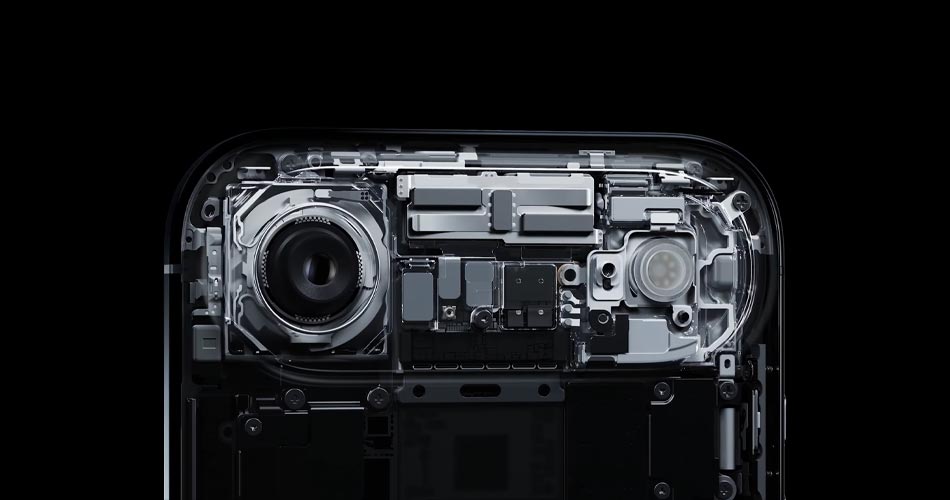
Shrinking the Face ID module could change that equation. Instant Digital claims Apple has asked suppliers for a redesigned Face ID component slim enough to coexist with an ultra wide camera, alongside the existing main lens.
If true, this would directly address one of the most common criticisms of the iPhone Air. Despite its premium price, the single-camera setup feels like a compromise compared to similarly priced iPhones.
The second camera rumor is gaining momentum

This is not the first time a second camera has been linked to a future iPhone Air.
Back in November, Digital Chat Station reported that Apple was exploring ways to maintain the Air’s thin and lightweight profile while expanding its camera system. That report was later reinforced by The Information, which said Apple was actively developing a dual-camera configuration for the device.
Together, these reports suggest Apple is not abandoning the ultra-thin philosophy of the iPhone Air. Instead, it is trying to engineer its way out of the limitations that philosophy created.
Apple’s broader biometric strategy
Apple’s approach to biometric hardware offers some additional context here.
For its rumored iPhone Fold, expected later this year, Apple is reportedly opting for Touch ID in the side button instead of Face ID. The reason is familiar. Face ID hardware is still relatively bulky, and every millimeter matters in a foldable design.
That decision makes Apple’s reported push for a thinner Face ID system more interesting. If Apple can meaningfully shrink the TrueDepth components, Face ID could return to future ultra-thin devices that currently cannot accommodate it.
Could this ever reach the Mac
Instant Digital goes one step further, suggesting that an ultra-thin Face ID module could eventually appear in a MacBook. For now, that remains highly speculative.
Apple has explored Face ID on the Mac before. In 2022, Bloomberg’s Mark Gurman reported that Apple tested Face ID for the iMac, but the technology was not compact enough for thin displays. Face ID has still not made its way to any Mac.
Apple has also publicly defended Touch ID on Macs, arguing that a fingerprint sensor near the keyboard is often more convenient. Still, a slimmer Face ID system would remove one of the biggest technical roadblocks.
The 404 take
Nothing here points to an immediate product change. The iPhone Air 2 is not expected until next year according to popular opinion, but a leak from Weibo leaker Fixed Focus Digital in late December 2025 points to a 2026 release.
That said, this rumor highlights something important. Apple is actively reassessing how much space Face ID really needs. If the company can shrink its facial authentication hardware without sacrificing reliability, it could unlock better cameras, thinner designs, and entirely new form factors.
For a device like the iPhone Air, that could make all the difference.