

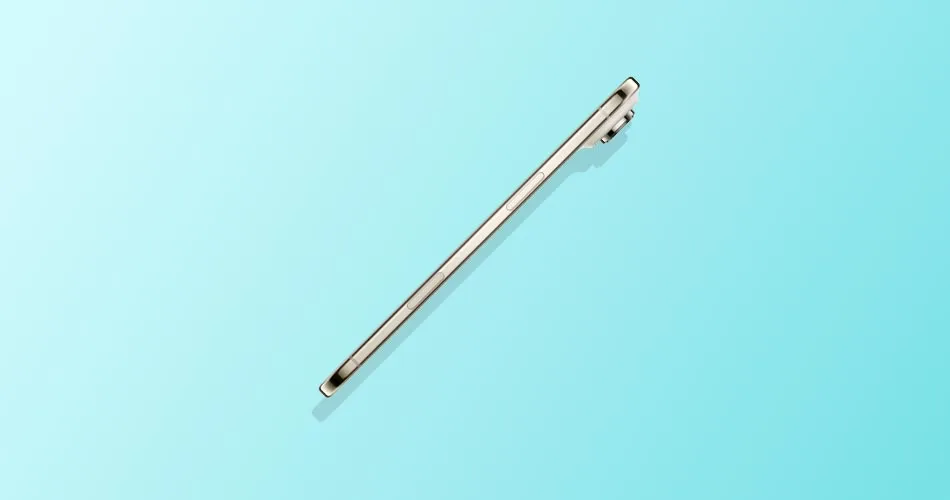
Apple spent years slimming the iPhone down, shaving millimeters here and grams there, until the iPhone Air arrived as a statement piece. Ultra-thin, ultra-light, and unapologetically eSIM-only. For most people, that is the end of the story.
For a small group of tech enthusiasts, it was apparently a challenge.
When eSIM-only is not enough
The iPhone Air launched without a physical SIM tray for a very Apple reason. Space is everything. In a phone this thin, something had to give, and Apple decided the SIM tray was expendable. The move also nudged markets like China, historically resistant to eSIM, a little further into the future.
But not everyone is ready to let go of a physical SIM just yet. Enter the tinkerers.
A handful of brave, or reckless, modders have figured out how to retrofit the iPhone Air with an actual SIM card tray. The process is real, functional, and absolutely not something Apple wants you doing.
The hack that makes it possible
The trick revolves around one specific internal component: the haptic engine.
To make room for a SIM tray inside the iPhone Air’s ultra-tight internals, modders remove the original vibration motor that powers Apple’s famously precise haptic feedback. In its place, they install two new parts:
- A much smaller vibration motor that delivers basic, no-frills haptics
- A physical SIM tray and slot assembly that allows a standard SIM card to function normally
The phone boots, the SIM works, and congratulations, you now own something Apple never intended to exist.
Suggested: New Leak Says iPhone Air 2 Is Still Coming in 2026
What you gain, and what you lose

On paper, this sounds like a win for anyone clinging to physical SIM cards. In reality, it is a very expensive science experiment.
You immediately void your warranty. There is no gray area here. Apple will not touch this phone again. Battery life is also a question mark. The smaller vibration motor could save some space and power, but the SIM tray assembly adds its own bulk, and the iPhone Air does not exactly have battery capacity to spare.
Then there is resale value, which takes a hit the moment you open the device.
For roughly 99 percent of iPhone Air owners, this mod makes no sense at all.
A vanity project, and nothing more
Still, there is something oddly admirable about it. This is not about practicality. It is about proving that it can be done.
If you have the technical skills, a healthy disposable income, and zero concern for warranties or depreciation, this is the kind of project that scratches a very specific itch. It is hardware hacking as a flex.
For everyone else, the message is simple. Apple made the iPhone Air eSIM-only for a reason. This hack is clever, impressive, and completely unnecessary.
But in a world where tech increasingly feels sealed shut and untouchable, it is kind of refreshing to see someone grab a screwdriver and say, “What if I didn’t listen?”