

Apple’s upcoming iPhone 17e looks set to receive a noticeable design upgrade, but it still won’t fully catch up to the rest of the iPhone 17 lineup.
According to a well-known Weibo leaker, the budget-friendly model will adopt Dynamic Island, while sticking with a 60Hz display.
For some users, that tradeoff may be acceptable. For others, it highlights Apple’s continued line between its entry-level and premium phones.
Dynamic Island Comes to Apple’s Most Affordable iPhone
Leaker Digital Chat Station claims the iPhone 17e will feature a 6.1-inch OLED display with Dynamic Island replacing the traditional notch.
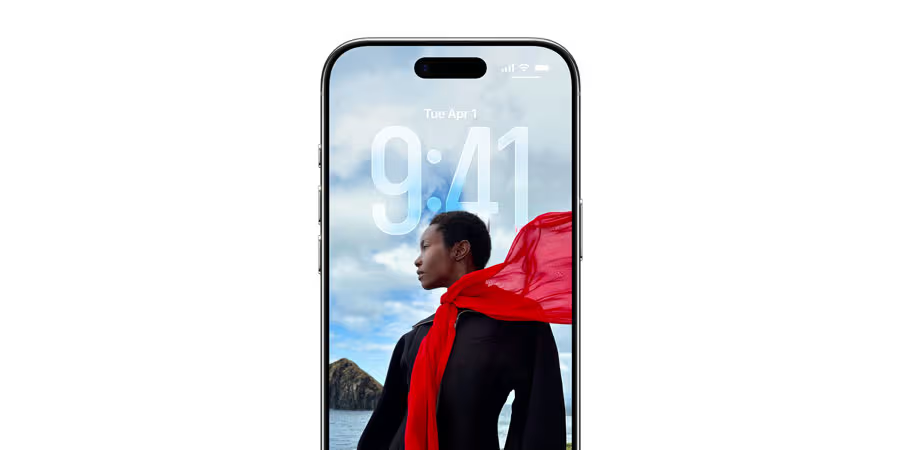
That would mark a clear design shift from the iPhone 16e, which still uses a notch similar to the iPhone 13 and iPhone 14. The change also suggests Apple is once again basing its “e” model on a more recent flagship design. In this case, the iPhone 17e appears to follow the visual language of the iPhone 15, which was the first non-Pro iPhone to gain Dynamic Island.
Dynamic Island adds an interactive area at the top of the display for live activities such as navigation, music playback, timers, and calls. While it does not change how the phone performs, it makes the iPhone 17e feel more modern at a glance.
Related: iPhone 17e: Expected Features, A19 Chip Upgrade, MagSafe, and Release Timeline
Still 60Hz, While the Rest of the Line Moves Ahead
Despite the design update, the display itself is expected to remain unchanged in one key area.
- 6.1-inch OLED panel
- 60Hz refresh rate
- No ProMotion support
Apple upgraded most of the iPhone 17 lineup with 120Hz ProMotion displays, bringing smoother scrolling and better responsiveness. Keeping the iPhone 17e at 60Hz is widely seen as a cost-saving decision, and it reinforces Apple’s strategy of reserving display upgrades for higher-priced models.
For everyday users, 60Hz is still perfectly usable. But once you experience 120Hz on an iPhone, it can be hard to go back.
A19 Chip, With Possible Performance Limits

The iPhone 17e is also expected to move to Apple’s A19 chip, replacing the A18 found in the iPhone 16e.
The A19 is reportedly built on TSMC’s third-generation 3nm process (N3P) and offers around 5–10% better CPU performance compared to A18. However, another leaker claims Apple may use a downclocked version of the chip in the iPhone 17e.
Suggested: Apple’s iPhone Roadmap: Foldable iPhone, iPhone 20, and What’s Coming Next
If that turns out to be true, real-world performance could land closer to the A17 Pro, with most gains coming from efficiency and Neural Engine improvements rather than raw speed.
MagSafe May Finally Arrive
One of the more practical rumored upgrades is the addition of a magnetic ring for MagSafe charging. The iPhone 16e lacks MagSafe support, which has been a notable omission.
If Apple brings MagSafe to the iPhone 17e, it would instantly improve accessory compatibility without raising costs significantly.
Cameras and Connectivity Stay Familiar
Other hardware details are expected to remain largely unchanged:
- 48MP rear camera
- 12MP front-facing camera
- Face ID
- Possible use of older C1 or C1X modem
- No N1 wireless chip, based on leaked code
These choices again point to Apple prioritizing value and margins over headline-grabbing upgrades.
Launch Timing and Price
The iPhone 17e could launch as early as February, mirroring last year’s iPhone 16e release, though a spring launch remains possible.
Suggested: Apple Hardware Launches in 2026: iPhone, Mac, iPad, and More
The starting price is expected to stay at $599, keeping it positioned as Apple’s most affordable new iPhone.