

For years, tech experts have been asking what comes after the smartphone. In 2024, Apple gave a strong answer with the Vision Pro, calling it the start of spatial computing.
By 2026, spatial computing has moved beyond tech circles into mainstream discussion. But is it really becoming the next mobile platform, or is it still mostly for early adopters?
This article breaks it down with examples, challenges, and signs to watch in 2026. I’ll also explain why this technology matters for both casual users and professionals.
Understanding Spatial Computing
Spatial computing is about blending digital content with the real world. Instead of using apps only on a screen, the environment around you becomes part of the interface. Imagine virtual windows floating in your room, 3D objects you can walk around, or apps that sit on your desk like real objects.
It goes beyond classic virtual reality (VR) or augmented reality (AR). Spatial computing relies on sensors, computer vision, and AI to understand the environment and respond naturally to gestures, eye movement, and voice. Essentially, your room becomes part of your computer.
Case Study: Bloomberg developed a version of its app for the Vision Pro. Users can view charts, news summaries, and dashboards in spatial form. Multiple panels can float around the room, giving users a new way to track financial data. This is a prime example of spatial computing moving from entertainment into real work applications.
Another interesting use case comes from industrial design and training. Companies are using spatial computing to create virtual prototypes of machines and products, allowing teams to interact with 3D models without leaving their office. This reduces errors, accelerates collaboration, and saves costs. The Vision Pro already serves an app called OnShape Vision.
Healthcare is another area seeing real benefits from spatial computing. Surgeons are using AR headsets to overlay patient scans directly onto the body during operations, improving precision and reducing errors. Medical students can explore 3D models of anatomy in ways textbooks or flat screens never allowed. Hospitals are also adopting spatial computing to streamline workflows, from training nurses to coordinating complex procedures. These applications show that spatial computing is not just a novelty but a tool that can directly improve outcomes in high-stakes environments.
Why 2026 Feels Different
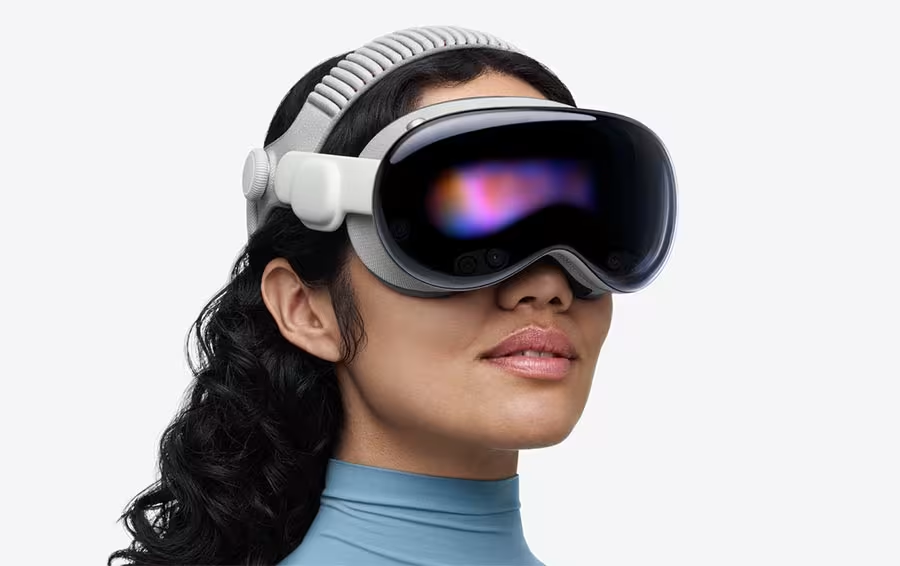
Apple’s Vision Pro announcement compared spatial computing to the Mac and iPhone, implying it could redefine computing. Tim Cook told us:
Just as the Mac introduced us to personal computing, and iPhone introduced us to mobile computing, Apple Vision Pro introduces us to spatial computing.
That statement pulled spatial computing out of niche discussions and into mainstream attention.
Since the launch, several developments have accelerated adoption:
- Enterprise Adoption: Companies like Bloomberg are building spatial apps, signaling that businesses see value beyond novelty. Financial dashboards, analytics, and immersive news experiences show that spatial computing has practical use cases.
- Smarter AI: Advances in AI, scene recognition, and gesture tracking make spatial experiences smoother and more intuitive. Early demos often felt gimmicky, but improvements now allow users to complete real tasks, such as analyzing data or collaborating in virtual spaces.
Together, these trends show spatial computing as a gradual evolution rather than a short-lived tech fad.
Challenges Holding Back Widespread Adoption
Even with promising progress, spatial computing faces significant hurdles before it becomes a daily tool for most people.
Hardware Limitations: Devices like the Vision Pro are still expensive and bulky. While the technology is impressive, wearing a headset for long periods is not comfortable for everyone. Tech reviewers from The Verge note that early headsets, although powerful, are not yet practical for casual users.
Limited App Ecosystem: Mobile devices became essential because millions of apps solved everyday problems. Spatial computing currently has fewer apps available, mostly focused on enterprise use cases or specialized tasks. While a larger library of accessible, daily-use apps and even games is still developing for the Vision Pro, the choices are limited.
Industry Uncertainty: Even major tech companies face setbacks. Meta’s Reality Labs division has recently undergone budget cuts and product delays, showing that even heavily invested companies can pivot away from spatial computing temporarily.
User Habits: Unlike smartphones, which fit in your pocket, spatial devices require users to actively wear headsets or glasses. Many casual users may find it intrusive, limiting adoption until lighter, less conspicuous hardware is available.
Why Spatial Computing Could Follow Mobile’s Path
Despite these challenges, spatial computing has structural advantages that could allow it to mirror mobile’s growth trajectory.
Enterprise-First Adoption: Historically, technologies such as laptops, tablets, and even smartphones first gained traction in professional settings before becoming mainstream. Spatial computing is following this pattern. Bloomberg’s financial dashboards, industrial design applications, and corporate training programs demonstrate strong enterprise interest.
Incremental Improvements: Mobile devices did not become indispensable overnight. Gradual improvements in screen quality, processing power, and software ecosystems made smartphones a daily necessity. Spatial computing is following a similar step-by-step path. Lighter headsets, smarter AI, better gesture tracking, and improved battery life are steadily making devices easier to use.
Platform Support: Apple continues to invest in spatial computing by providing developer tools, SDKs, and frameworks. Developers are encouraged to build apps specifically for spatial experiences, which could eventually lead to a robust app economy similar to mobile.
Real-World Case Study: Boeing and other aerospace companies have been using spatial computing for aircraft assembly. Workers use AR headsets to overlay assembly instructions on real parts. This approach reduces errors and training time, showing that spatial computing can improve productivity in high-stakes industries. These examples demonstrate practical advantages that can justify investment.
What Casual Users Should Watch in 2026
Even if you are not an early adopter, there are three indicators that will signal whether spatial computing is moving toward mass adoption:
- Hardware Becomes Affordable and Comfortable: Cheaper devices and lighter formats, such as glasses or smaller headsets, will encourage daily use.
- Daily-Use Apps Appear: Apps for messaging, social media, video, or productivity, beyond enterprise-only applications, will make the technology feel essential.
- Platform Commitment Continues: Long-term support from Apple or other tech giants ensures developers invest in building useful apps.
When all three align, spatial computing could gradually integrate into everyday life, not just as a novelty or professional tool.
The Big Picture: Why It Matters
Spatial computing represents a shift in how we interact with digital content. For casual users, it might start as an immersive media experience, such as watching sports highlights floating in your room or exploring interactive educational content. For professionals, it has the potential to reduce training costs, increase productivity, and change collaboration methods.
The 2026 landscape shows that spatial computing is no longer a fringe experiment. Real companies are actively deploying it, hardware is improving, and AI is making experiences more intuitive. Case studies such as Bloomberg’s financial dashboards and Boeing’s assembly use show that spatial computing can solve practical problems now, not just in the future.
The economic potential of spatial computing is massive. According to Gartner, the market is expected to grow from $110 billion in 2023 to $1.7 trillion by 2033, reflecting widespread adoption across industries. This growth highlights how spatial computing could shift not only how we work and play but also the scale of the global technology economy over the next decade.
Conclusion
Spatial computing is real and progressing steadily. It is no longer just hype. Enterprise adoption, AI improvements, and platform investments indicate that it could become as essential as mobile over time.
However, it is not yet a replacement for smartphones. In 2026, spatial computing is optional, interesting, and potentially useful, but not yet indispensable. Its wider adoption depends on cheaper hardware, more daily-use apps, and continued support from major platforms.
If these conditions are met, spatial computing could gradually become part of everyday life. It may take years, but the foundation is being laid for a slow, steady expansion that could ultimately mirror the rise of mobile devices.